How to Measure the ROI of RSA-911 Data Validation: A Framework for VR Agency Leaders
Every vocational rehabilitation agency submits RSA-911 data. The question for leaders is what it costs to get that data right, and what it costs when errors surface late.
Errors found close to a deadline mean rework under pressure, and RSA does not treat a submission that is returned for correction as timely, unresolved issues can lead to corrective action. Catching them earlier changes that. This article offers a simple way to measure the return, whether or not your agency ever puts a dollar figure on it.
Where the return shows up
The return on RSA-911 data validation appears in three places, and only the first is easy to price.
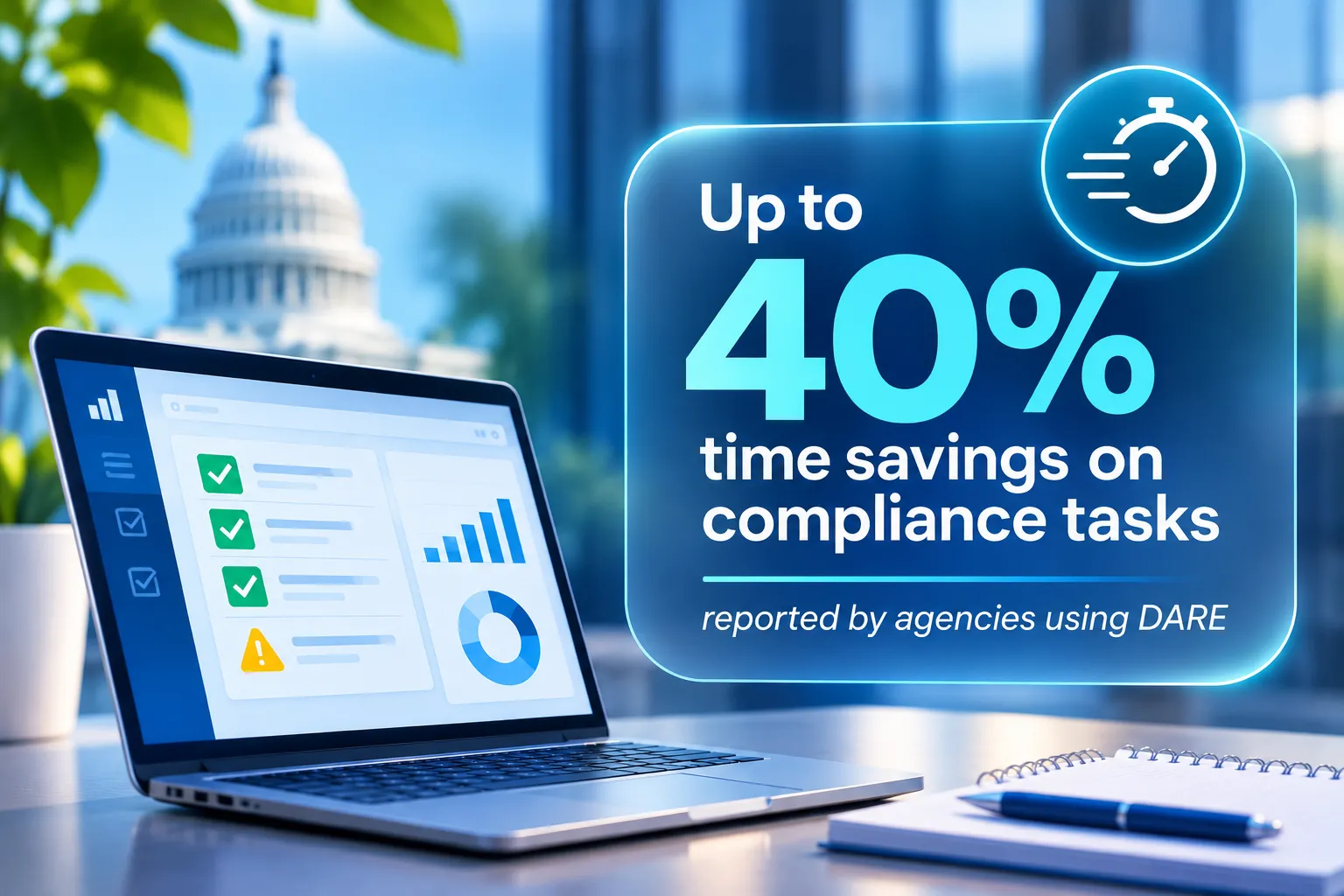
- Staff time. Agencies using DARE report up to 40% time savings on compliance tasks. Because errors can be reviewed throughout the reporting period instead of at the deadline, staff spend fewer hours checking and fixing data under pressure. These are the hours you will count in your baseline below.
- Risk. DARE runs 600+ automated edit checks on every RSA-911 file, so agencies can find and resolve errors before the submission deadline instead of letting them escalate into corrective action.
- Data quality and training. DARE organizes errors by staff member, office, region, supervisor, reporting element or edit check. That shows where errors concentrate, and whether the cause is training, configuration or workflow, so agencies can aim training and fixes at the offices or roles that need them instead of retraining everyone.
Federal or Complete: which question does your agency need answered?
DARE comes in two versions on one platform, and the return you measure depends on which one fits.
- DARE Federal aligns its validation results with the federal RSA edit checker, so agencies can focus on the errors that may affect federal submission. It answers the question, “Are we ready to submit?”
- DARE Complete includes those federally aligned checks and adds quality checks designed to identify potential concerns that may not be recognized as federal errors, such as incomplete information, inconsistencies, and unusual data relationships. It answers a second question: “Can we trust the data behind the submission?”
Agencies can switch between the two versions. The federal checker identifies the errors; DARE helps your agency act on them.
How to calculate it in your agency
Start with a baseline, before changing anything. Track four measures for one reporting cycle:
- Hours per cycle that staff spend finding and correcting RSA-911 errors.
- Errors found early vs. late, meaning before and after submission.
- Time to resolve an error, from the day it is identified to the day it is corrected.
- Training hours spent on recurring errors.
Then price the part you can price:
Annual staff time return = hours saved per year × average loaded hourly cost of staff
Compare that figure with what the tool costs your agency per year. Keep the harder-to-price items next to it: corrective-action risk avoided, and training aimed at the offices or roles where errors concentrate.
Note which RSA directive each cycle was reported under. DCL 25-04 governs program year 2026 and DCL 27-01 takes effect July 1, 2027, so a change in the rules is not mistaken for a change in your agency’s performance.
Repeat the same four measures for two or three reporting cycles. A trend is more convincing than a single number.
Because DARE works with any case management system by ingesting your RSA-911 file along with a caseload file, you can see this return without replacing the system you use today.
See it in your own data
The quickest way to find your agency’s return is to look at your own RSA-911 results. Download the DARE one-pager to compare DARE Federal and DARE Complete, or schedule a demo to see how it works with your case management system.
DARE is Libera’s data analysis and report edit-checker for vocational rehabilitation agencies. Learn more at libera.com/dare-rsa-911.