More Capacity, Cleaner Data, Faster Payments: AI-Assisted Case Management for Agency Leaders
Vocational rehabilitation agencies need more time for participants, but documentation, vendor payment processing, and reporting compete for that capacity. Counselors spend hours on documentation. Vendor payments take time to process. And intake data needs to remain accurate months later, when RSA-911 reports are due.
In recent articles, we looked at what AI-assisted capabilities in inFormed do and why agencies can trust them: AI assists, and people approve. This article looks at the question leaders ask next: what does the agency actually get?
Four kinds of value
1. Time back for counselors
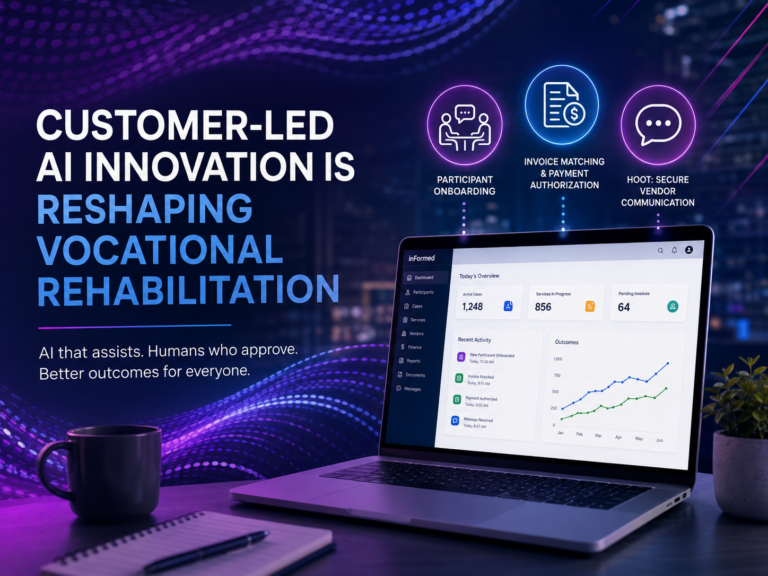
Participant onboarding in inFormed turns interviews into pre-populated case forms. The counselor reviews, edits and approves every field. For agencies, Libera estimates:
- A 50–70% reduction in documentation time
- Forms completed in minutes instead of hours
- More dedicated contact time with the participant in person
2. Cleaner data, stronger compliance
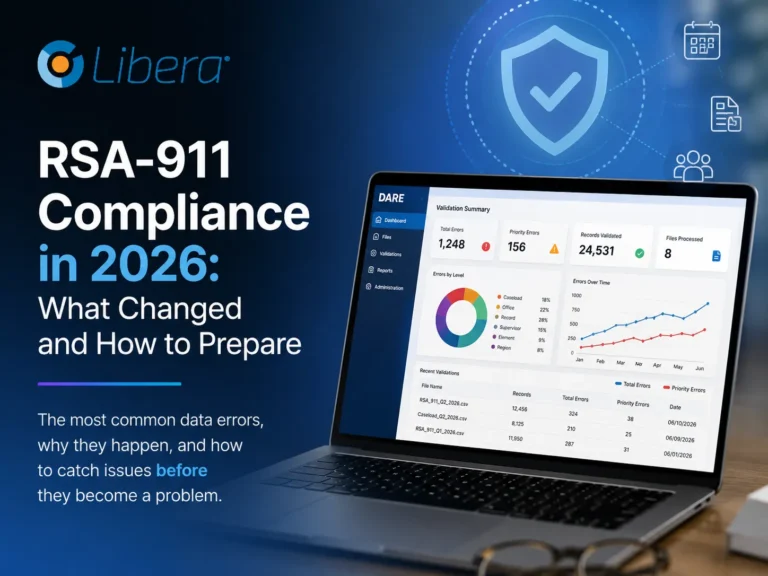
What is captured at intake drives RSA-911 reporting later. Onboarding automation is designed to deliver more consistent and complete records, and standardized data collection across programs. Better data at the start means fewer corrections at the end. And DARE, Libera’s data analysis and report edit-checker, helps catch RSA-911 errors before submission deadlines.
3. Faster, more accurate vendor payments
Invoice matching compares submitted invoices against expected amounts and prepares a payment authorization for approval. Libera estimates that invoice intake, matching, and payment authorization preparation time can drop from about 2.15 hours to less than 5 minutes. The result is more timely payments to vendors and increased accuracy of payment amounts, while a person still authorizes every payment.
4. Capacity without adding headcount
For agency leaders, the benefit extends beyond time saved on individual tasks: less documentation and processing can create capacity without adding staff. For counselors, that can mean less after-hours documentation, more engagement and eye contact during sessions, and a better day at work. Communication supports that capacity, too. Hoot, inFormed’s secure messaging service, keeps communication with the State, vendors, and participants in one place, with end-to-end encryption that meets HIPAA and strict financial data requirements.
How to measure it in your agency
For leaders, the next question is whether time saved on these tasks translates into more capacity for participant services. That means looking beyond faster paperwork to what changes for the agency: staff time, payment processing, data quality, and participant contact.
The value of any new tool is easier to see when you know where you started. Before adopting AI-assisted capabilities, agree on a baseline and track four simple measures:
- Documentation time per case: how long it takes to complete intake forms today.
- Time to payment authorization: how long an invoice takes from submission to approval.
- RSA-911 error rate: how many errors are found before and after submission.
- Counselor contact time: how much of the week is spent with participants versus on paperwork.
These numbers turn “it feels faster” into something a director can take to a budget conversation.
AI that assists. People who approve.
None of this works without trust. In inFormed, every suggestion is reviewed by a person before anything moves forward, and the system does not make decisions that affect participants on its own. Role-based access and permissions, a full audit trail, and hosting in AWS GovCloud keep agencies in control.
See it for yourself. Schedule a demo or download the inFormed one-pager.
inFormed is Libera’s end-to-end case management platform built specifically for state vocational rehabilitation agencies. Learn more at libera.com/informed.